Jawar Mohammed claim of Somali not marginalized.
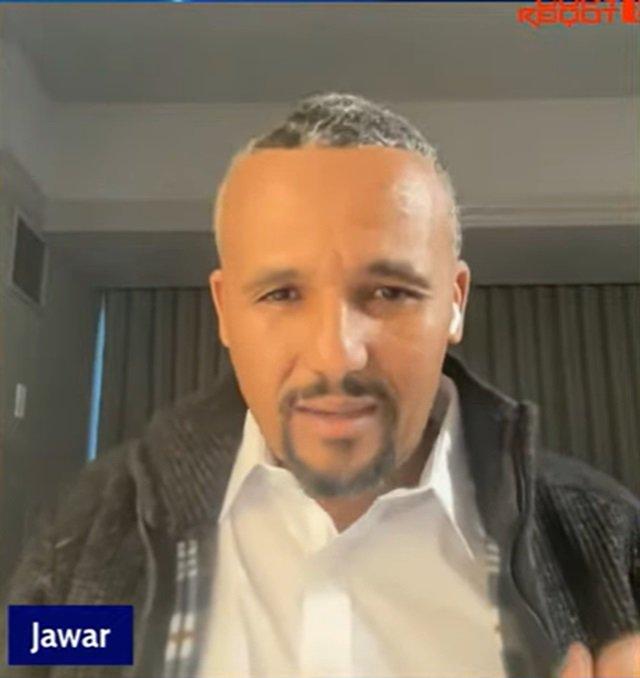
Jawar Mohammed, your claim that Somali people have not been marginalized under Prime Minister Abiy Ahmed's administration is a serious misrepresentation of their lived experiences over the past eight years.
Your argument appears to overlook the suffering, forced displacement, territorial grievances, political exclusion, and loss of civilian lives experienced by Somali communities in Ethiopia.
Before presenting the Prosperity Party as a political force that has empowered Somali people, you must confront the realities of West Sitti, Garba-Issa, Moyale, Dire Dawa, and the wider Somali Region.
1. What Happened to the Somali People in West Sitti?
Jawar Mohammed, how can you speak of political empowerment while Somali communities continue to suffer displacement from their ancestral territories?
Somali community representatives report that thousands of civilians have been killed during years of conflict in West Sitti, with some estimates reaching 6,000 deaths.
They also describe the loss of extensive pastoral territories, including three towns—Garba-Issa, Undhufo, and Aydaytu—and 11 surrounding villages.
These communities have raised allegations of forced displacement, destruction of property, and restrictions preventing displaced families from returning to their homes.
Are these signs of political empowerment, or evidence of profound marginalization?
2. Have You Forgotten the Garba-Issa Massacre of 24 July 2021?
On 24 July 2021, Garba-Issa experienced one of the most devastating episodes reported by Somali communities in recent Ethiopian history.
According to accounts from affected communities, approximately 400 innocent civilians were killed, many of them women and children.
Survivors have alleged that Ethiopian federal security forces were implicated in the violence and subsequent displacement.
Jawar Mohammed, where was the protection of these citizens? Where is the justice for the victims? Where is the accountability?
How can a government be described as empowering a community when that community continues to demand answers about the killing of its civilians and the loss of its homes?
These allegations deserve an independent investigation, not political dismissal.
3. What About Moyale and the Displacement of Somali Communities?
The recent allegations of attacks against Somali civilians in Moyale and Dawo Zone raise further questions about the federal government's responsibility to protect all citizens.
Affected communities report attacks, destruction of homes and businesses, and large-scale displacement.
Somali communities also continue to raise concerns about territorial administration and the political status of Dire Dawa.
Do you consider the appointment of a few Somali officials sufficient compensation for unresolved territorial disputes, destroyed communities, and displaced families?
Political appointments cannot replace the right to life, security, land, and constitutional protection.
4. Education: Where Is the Empowerment of Somali Youth?
Let us also examine education.
Somali communities continue to face serious educational disadvantages, including poor secondary-school outcomes and unequal access to higher education.
Critics of the government's education policies argue that these inequalities have deepened under Abiy Ahmed's administration.
Some community accounts claim that only around 300 Somali students gained access to higher education during the past eight years—a figure that requires verification against official admissions records.
But the broader question remains:
How can we celebrate political empowerment when Somali children and young people continue to face severe barriers to education?
What is the value of political representation if the next generation is denied meaningful opportunities to develop its potential?
5. The Somali People's Demand Is Not for Four or Eight Political Appointments
Jawar Mohammed, you appear to misunderstand the central political demand of the Somali people.
Somali communities are not simply demanding four, eight, or ten appointments within the Prosperity Party.
They are demanding genuine political self-representation, constitutional rights, territorial protection, and the freedom to organize politically according to their own priorities.
The Somali people's political aspirations cannot be reduced to the appointment of individuals who remain accountable primarily to a centralized party structure.
The question is not how many Somali politicians have been appointed by Abiy Ahmed.
The question is whether Somali communities possess meaningful political power to protect their people, represent their interests, and influence decisions affecting their land and future.
Statements attributed to Shimelis Abdisa describing the Prosperity Party as an Oromo political party have contributed to concerns about the party's character and whose interests it represents. Those statements should be assessed in their original context.
6. You Cannot Understand Somali Politics Without Understanding Somali Historical Grievances
Jawar Mohammed, your argument appears to underestimate the historical experiences and political grievances of Somali communities.
The Somali people's struggle is not merely a competition for government positions.
It concerns decades of contested territorial administration, displacement, political exclusion, unequal development, and demands for recognition and self-representation.
When Somali individuals must approach influential political figures outside their own institutions to seek protection or assistance, that does not necessarily demonstrate empowerment.
It may instead reveal how weak their own political representation and institutional protections have become.
Somali citizens should not depend on the goodwill of any individual politician to enjoy their constitutional rights.
7. Can Individual Political Appointments Restore Garba-Issa, West Sitti, Moyale, and Dire Dawa?
Let me ask you directly:
Can the appointment of a Somali minister restore Garba-Issa to its displaced residents?
Can a federal political position guarantee the safe return of families from Undhufo and Aydaytu?
Can individual appointments resolve the territorial disputes in Moyale?
Can they address the longstanding demands of Somali communities in Dire Dawa?
Can they bring justice to families who lost their loved ones?
Can they reverse years of educational disadvantage?
The answer is no.
Meaningful political empowerment must be measured by institutional rights, security, accountability, access to services, and the ability of communities to shape their own future—not simply by the number of officials appointed to government offices.
8. The Prosperity Party's Record Must Be Judged by Its Actions
Jawar Mohammed, you may regard Abiy Ahmed's Prosperity Party as a vehicle for political inclusion.
Many Somali critics, however, view its record very differently.
They argue that its policies and handling of territorial disputes have weakened Somali political autonomy, deepened historical grievances, and failed to protect vulnerable communities.
These concerns are directed at the actions of political leaders and government institutions, not at Oromo civilians or the Oromo people as a whole.
The Somali people deserve peaceful coexistence, mutual respect, and equal constitutional protection alongside all other communities in Ethiopia.
But peaceful coexistence cannot be built on the denial of historical grievances or the dismissal of present suffering.
My Final Question to Jawar Mohammed
Before claiming that Somali people have not been marginalized under Abiy Ahmed, I invite you to answer five fundamental questions:
1. What has the government done to ensure justice for the victims of the reported Garba-Issa massacre?
2. When will displaced Somali families from West Sitti be able to return safely to their homes?
3. How have the government and the Prosperity Party protected Somali territorial and constitutional rights in Moyale and Dire Dawa?
4. What measurable progress has been achieved in Somali educational opportunities and political self-representation?
5. How can the appointment of a few individuals be described as empowerment while fundamental community grievances remain unresolved?
Jawar Mohammed, the Somali people are not asking for political favours. They are demanding justice, dignity, security, constitutional equality, and genuine political representation.
You cannot measure their empowerment by the number of Somali faces appearing in government offices while overlooking the experiences of displaced families, victims of violence, and communities struggling to defend their rights.
The suffering of Somali communities cannot be erased by political rhetoric.
Their grievances cannot be resolved through symbolic appointments.
And their constitutional rights must never be treated as privileges granted by the Prosperity Party.
The central question remains:
If Somali people have truly been empowered under Abiy Ahmed, why do so many affected communities continue to demand protection, justice, the right to return home, and genuine political representation?
Bubal Think Tank — Beyond the Headlines
Heavy fighting has reportedly erupted in Ethiopia’s Somali Region, particularly around Jamu village and the Somali-administered section of Moyale, amid escalating tensions along the Somali–Oromia regional boundary.
Nine years after the reported massacre of ethnic Somali civilians in Hawadaay, questions of accountability, displacement, media silence and political responsibility remain central to Ethiopia’s unresolved search for justice. The tragedy demands more than remembrance: it demands truth, credible investigation and recognition of the victims.
The appointment or promotion of a small number of Somali politicians to senior positions within Ethiopia’s Prosperity Party (PP) and government—including Adem Farah and Ahmed Shide—raises an important question:
