Nine years after the reported massacre of ethnic Somali civilians in Hawadaay, questions of accountability, displacement, media silence and political responsibility remain central to Ethiopia’s unresolved search for justice. The tragedy demands more than remembrance: it demands truth, credible investigation and recognition of the victims.
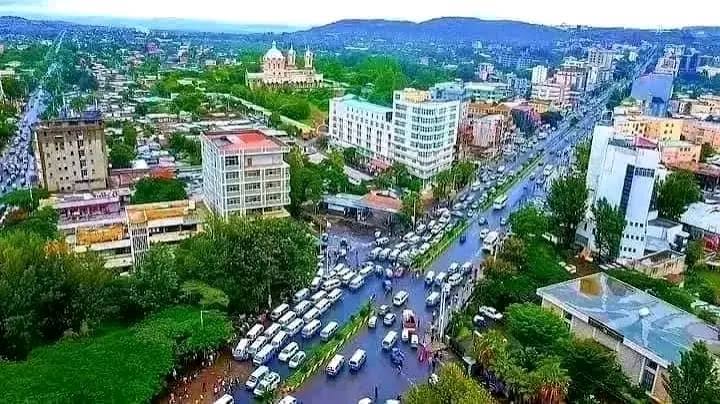
The reported killing of ethnic Somali civilians in Hawadaay in September 2017 raises enduring questions about state responsibility, the suppression of information, political power and the meaning of reconciliation. Nine years later, the demand for justice must not be lost in the changing narratives of Ethiopian politics.
On 12 September 2017, the commercial town of Hawadaay, also known as Aweday, in Ethiopia’s Oromia Region became the scene of a violent episode that continues to demand serious attention. According to a scholarly paper published under the title Nine Years in the Shadow: The Unaddressed Atrocities of the Hawadaay Massacre in 2017, ethnic Somali civilians, including merchants, workers and residents, were targeted in attacks on businesses, homes and commercial premises.
The significance of Hawadaay extends beyond the immediate violence. It raises difficult questions about the protection of civilians, the responsibilities of regional authorities, the role of the media during a crisis and the relationship between local suffering and national political struggles.
As Ethiopia reflects on the political changes that transformed the country between 2015 and 2018, Hawadaay deserves to be examined not merely as another episode of intercommunal violence, but as a test of the institutions expected to protect citizens when their lives and livelihoods are threatened.
My central argument is straightforward: no credible process of national reconciliation can be complete if the experiences of victims remain insufficiently acknowledged, allegations of official wrongdoing are left unresolved and affected communities are expected to move forward without a transparent account of what happened.
Hawadaay occupies an important place in the commercial life of Eastern Hararghe. Its position along the road connecting Harar and Dire Dawa has made it a significant centre for the khat trade, bringing together merchants, transport operators, wholesalers and customers from different communities.
That commercial relationship is important because it complicates the familiar tendency to explain ethnic violence as the inevitable result of ancient hostility.
Economic interdependence does not eliminate prejudice, political competition or local disputes. Nevertheless, communities that trade with one another, share public spaces and depend on common commercial networks also have practical reasons to maintain peaceful relations. Their everyday interactions are often more complicated than the political narratives subsequently imposed upon them.
The source paper describes a history of coexistence between Oromo residents and ethnic Somali traders and refers to traditional mechanisms of dispute resolution associated with the Oromo Gadaa system and Somali Xeer. These institutions, although not a guarantee against violence, represent forms of community knowledge that should not be dismissed when discussing peace in the Horn of Africa.
The events reported in Hawadaay therefore require more than a simplified explanation based on ethnic identity. The essential questions concern what happened, who was targeted, how civilians were protected or failed to be protected, and whether those responsible have faced a credible process of accountability.
The paper reports that attacks on 12 September 2017 disproportionately targeted ethnic Somali civilians and Somali-owned commercial premises. It cites estimates from victim associations and regional sources placing the death toll between 40 and more than 50 people. Those figures should be understood as estimates reported by the paper, rather than as a definitive, independently verified final count.
Behind every reported casualty is a human loss that cannot be adequately represented by a statistic. Families lose relatives, businesses lose the people who sustained them, and communities lose the ordinary confidence required to share markets, roads and neighbourhoods.
Remembering such an event is not an attempt to reopen divisions for their own sake. It is a necessary step towards understanding the consequences of violence and preventing the same failures from recurring.
One of the most serious arguments advanced by the source paper is that the Hawadaay violence was not simply a spontaneous clash between communities. It alleges that local administrative structures, regional security forces and mobilised youth networks played roles in the violence or failed to prevent it.
These are grave allegations. They deserve neither automatic acceptance nor casual dismissal. They require transparent examination against reliable testimony, documentary evidence, security records and the findings of competent investigators.
The paper argues that Hawadaay's location inside Oromia's administrative territory is central to understanding the incident. It maintains that the violence occurred in an area under Oromia's security jurisdiction and that regional police and local administrative authorities therefore had responsibilities that cannot simply be transferred to neighbouring regional actors.
This point deserves particular attention. Whenever civilians face an organised attack, the first obligation of public institutions is to protect human life. Security forces must act impartially, emergency services must be accessible, and public officials must not allow political calculations to displace their responsibilities to the population.
If officers withdraw while civilians are attacked, if warnings are ignored or if officials obstruct emergency protection, those actions warrant investigation. If evidence establishes that authorities actively facilitated violence, the case for accountability becomes even more urgent.
However, a serious opinion article must also recognise the distinction between a failure to protect, deliberate complicity and direct responsibility for an attack. These are not interchangeable conclusions. Each requires evidence appropriate to the allegation.
The source paper advances a strong interpretation of state involvement in Hawadaay. Its conclusions should be tested through an independent and credible investigative process rather than treated as a substitute for one.
That is not an argument for weakening the case for justice. It is an argument for making the case strong enough to withstand scrutiny.
Accountability cannot depend on political allegiance. Nor should the identities of the victims determine whether allegations of wrongdoing are investigated with urgency.
The Hawadaay paper places the massacre within the wider struggle for power inside the Ethiopian People's Revolutionary Democratic Front (EPRDF), the ruling coalition during the period in question.
According to its analysis, the crisis unfolded amid mounting tensions between political factions, including the Oromo People's Democratic Organization leadership associated with Lemma Megersa and the established federal power structure. The paper argues that the breakdown in security and the resulting political crisis contributed to the weakening of the federal government's authority.
This interpretation points to a troubling possibility: that local violence can become entangled with national political competition, allowing the suffering of ordinary people to acquire a strategic significance for political actors far removed from the immediate consequences.
It is important, however, to distinguish between the broader political context and the specific claim that the massacre was deliberately engineered to produce a particular political outcome. The latter is a much stronger allegation and requires evidence establishing the connection between those who planned or carried out the violence and those who may have benefited politically.
Political benefit, by itself, does not prove prior coordination or responsibility.
Nevertheless, the wider lesson remains relevant. When political institutions are divided, regional and federal authorities may become more concerned with defending their positions than with protecting the people under their jurisdiction. Security decisions can become instruments of competition, while victims are reduced to symbols in arguments over power.
That is precisely why civilian protection must be treated as an obligation independent of party politics.
The legitimacy of a government cannot rest solely on its promises of reform, its electoral standing or its ability to mobilise popular support. It must also be judged by what happens when citizens are vulnerable, particularly when those citizens belong to a minority or are politically inconvenient.
No political transition should be celebrated as a national achievement without asking whether the people who suffered during that transition received recognition, protection and justice.
The source paper also alleges that federal and regional communication officials restricted information about Hawadaay, while official messaging portrayed the violence as a security operation against external aggressors or infiltrators.
It specifically names federal communications minister Negeri Lencho and Oromia regional communications official Addisu Arega in its account of the alleged information restrictions and public messaging. These claims are allegations made in the paper and should not be treated here as independently established findings about the individuals concerned.
Even with that distinction, the broader issue is unmistakable: control over information during a crisis can profoundly affect how a tragedy is understood.
When reports of civilian deaths are not investigated openly, uncertainty creates space for rumours, competing casualty figures and politically convenient explanations. Survivors may struggle to have their experiences acknowledged, while those seeking answers encounter a public debate dominated by official statements rather than verifiable evidence.
A government does not protect public order by suppressing credible questions about the treatment of civilians. It strengthens public confidence by providing timely information, permitting independent reporting and correcting inaccuracies transparently.
Journalists also have responsibilities. Reporting on ethnic violence requires careful verification, especially when claims could inflame tensions or place vulnerable people at further risk. But verification must not become a pretext for indefinite silence, and responsible reporting should not be confused with repeating the version of events preferred by those in power.
Where evidence is incomplete, journalists should say so. Where accounts conflict, they should identify the disagreement. Where allegations implicate officials, those officials should have a fair opportunity to respond. And where credible evidence indicates that civilians were deliberately targeted, the public deserves to know what the evidence establishes.
The principle is simple: neither propaganda nor uncritical repetition of unverified allegations serves the victims.
Truth requires a process capable of distinguishing what is known, what is alleged, what remains disputed and what further investigation must establish.
The human consequences of Hawadaay cannot be confined to the immediate incident.
The source paper links the crisis to wider violence and reciprocal expulsions along the Oromia–Somali regional boundary. It reports that more than 100,000 civilians were internally displaced by late 2017 in the broader context of the conflict.
That figure refers to the displacement described in the paper's account of the wider crisis; it should not be interpreted as the number of people displaced from Hawadaay alone.
This distinction matters. Accurate reporting must identify the geographical and temporal scope of every figure. Otherwise, even a well-intentioned article can unintentionally misrepresent the scale or distribution of suffering.
But the wider displacement described in the paper points to a fundamental issue that is frequently overlooked in political discussions: violence continues long after the immediate confrontation ends.
Displacement can mean the loss of a home, a livelihood, a familiar community and the relationships that make daily life possible. For traders, the destruction or abandonment of commercial premises can also mean the loss of years of investment and the networks on which families depend.
Returning to a place of origin, where return is possible, does not automatically restore what was lost. People may need assistance to recover property, rebuild businesses, obtain documentation and re-establish trust with neighbours and local institutions.
Others may remain displaced because they do not feel safe returning or because the conditions necessary for a sustainable return have not been established.
These consequences require evidence-based assessment, not assumptions. The current circumstances of individual families affected by the 2017 violence cannot be established from the source paper alone.
That limitation makes a credible assessment of their present needs all the more important. A government or humanitarian organisation seeking to address the legacy of displacement should establish who remains affected, what assistance has been provided, what losses can be documented and what remedies are still required.
Displacement figures should not become historical footnotes. They should lead to practical questions about protection, housing, property, livelihoods and the rights of people who have been forced from their homes.
The source paper argues that, nine years after the massacre, meaningful judicial accountability remains absent. It also raises concerns about compensation for victims and the continuing hardship of displaced families.
Those conclusions call for careful, current verification before being presented as a definitive account of the status of every investigation or legal proceeding. The paper provides a basis for raising the accountability question, but it does not, by itself, establish the complete status of all relevant cases as of October 2026.
Even so, the question it raises is fundamental: what should happen when a serious allegation of mass violence remains unresolved in the public record?
The first requirement is an independent investigation with a clear mandate. Such an investigation should examine the attacks themselves, the conduct of security forces, the decisions of local and regional authorities, the response of federal institutions and any evidence of organised participation or deliberate obstruction.
Investigators must be able to obtain relevant records, interview survivors and witnesses safely, examine available forensic material and establish a reliable chronology. Witness protection and safeguards against intimidation are essential, particularly where people fear retaliation or believe that powerful individuals may be implicated.
The second requirement is due process. Allegations against particular individuals must be assessed fairly, and responsibility must be established on evidence. Accountability is not achieved by replacing one politically motivated narrative with another. It is achieved when credible findings lead to appropriate legal consequences.
The third requirement is meaningful redress for victims.
Where losses and responsibility are established, remedies may include compensation, restitution of property, assistance with recovery of livelihoods, rehabilitation and formal recognition of the harm suffered. The appropriate remedy will depend on the evidence and the circumstances of each case.
Public acknowledgement also matters. Families who have endured years of uncertainty should not have to rely exclusively on private recollection or political advocacy to keep their experiences in the public record.
Justice should not be understood as revenge against a community or as an opportunity to punish political opponents. It should be understood as the impartial application of law and the recognition that every civilian has a right to protection, dignity and a remedy when that right is violated.
Ethiopia's political experience demonstrates how difficult it can be to build a shared national future amid competing historical memories, regional grievances and demands for recognition.
National dialogue can create valuable opportunities for communities and political actors to discuss constitutional arrangements, representation, federalism and the distribution of power. Yet these discussions cannot substitute for addressing specific allegations of violence against civilians.
A constitutional conversation may establish principles for the future, but it cannot, on its own, determine what happened to a family whose relatives were killed, what became of a displaced merchant's property or whether public officials failed in their duties.
Reconciliation loses credibility when people are asked to embrace a common future before they have received a serious answer about the past.
The answer is not to abandon dialogue. It is to connect dialogue with truth-seeking, accountability and practical remedies.
For Hawadaay, that means ensuring that the experiences of affected Somali civilians are documented and considered alongside the wider history of relations between Oromo and Somali communities. It means resisting attempts to assign collective guilt to either population. And it means recognising that the responsibility of individuals or institutions, where established, cannot fairly be transferred to an entire ethnic group.
Communities are not uniform political actors. They contain people with different interests, experiences and beliefs. Treating an entire population as responsible for crimes allegedly committed by particular individuals reproduces the very logic that makes ethnic polarisation so dangerous.
Traditional institutions and local elders may also have a role in rebuilding relationships, provided their involvement does not undermine the rights of victims or replace formal accountability where serious crimes are alleged.
Community reconciliation and judicial justice serve different purposes. They can complement one another, but neither should be used to erase the other.
Nine years after the events described in the paper, the responsible response is not to repeat every allegation as established fact. It is to ensure that the questions raised by the tragedy are addressed through transparent, evidence-based action.
First, the relevant Ethiopian authorities should clarify the status of investigations into the Hawadaay attacks and any related allegations of official misconduct. If no adequate independent investigation has taken place, the case for establishing one should be considered seriously.
Second, researchers, journalists and human rights organisations should have the opportunity to examine available documentation and collect testimony in a manner that protects witnesses and respects the rights of those accused.
Third, the needs of affected families and displaced people should be assessed on the basis of current evidence. Any compensation, restitution or rehabilitation programme should have transparent eligibility criteria and a process through which decisions can be reviewed.
Fourth, public institutions should make relevant findings accessible wherever legally possible, while protecting confidential personal information and the safety of witnesses. If records are missing or contradictory, those limitations should be acknowledged rather than concealed.
Finally, national dialogue and reconciliation initiatives should make space for specific cases of alleged mass violence. A general commitment to peace is meaningful only when it produces practical mechanisms for addressing the harms that continue to divide communities.
These are not demands for a predetermined verdict. They are demands for a credible process through which the facts can be established and responsibility, if proven, can be addressed.
The history of Hawadaay should not be reduced to a contest over which political faction gained the most from the upheavals of 2017 and 2018. Nor should the suffering of Somali civilians be used to encourage hostility towards Oromo communities, whose members cannot collectively be held responsible for alleged actions by particular actors.
The more important question is whether Ethiopia's institutions can confront a painful episode in their recent history without allowing political loyalties to determine the value of a victim's life.
If allegations of organised attacks, failures of protection or deliberate information suppression are substantiated, they demand accountability regardless of who held office, which party benefited or how the country's political balance subsequently changed.
If particular claims cannot be substantiated, that too must be stated honestly. A reliable historical record depends on distinguishing evidence from interpretation and suspicion from established responsibility.
This is especially important in a political environment where competing narratives can harden into identities and where the memory of violence can be mobilised to justify further exclusion.
Nine years after September 2017, the enduring lesson of Hawadaay is that peace cannot be measured only by changes in government, public declarations of reconciliation or the passage of time. It must also be measured by whether affected families can seek answers, whether allegations are investigated fairly, whether displaced people can pursue durable solutions and whether public institutions accept scrutiny.
The people who suffered in Hawadaay should not have to compete with political narratives for recognition. Their experiences deserve a serious place in Ethiopia's historical record, supported by evidence and treated with dignity.
The passage of nine years does not make the questions raised by the massacre less important. It makes the need to address them more pressing.
A country cannot change its history by leaving its most painful episodes unexamined. Nor can it build lasting trust by asking victims to accept silence in place of justice.
Hawadaay must be remembered not as a weapon in Ethiopia's political struggles, but as a call to protect civilians, establish the truth and uphold the principle that no person or institution is above accountability.
This opinion article is based on and responds to the paper Nine Years in the Shadow: The Unaddressed Atrocities of the Hawadaay Massacre in 2017: State Engineering, Media Suppression, and Elite Factionalism in Ethiopia’s Political Transition, published in the Journal of Ethiopian Security & Political Studies, Volume 12, Issue 3, and attributed in the supplied PDF to the Department of Political Science and Conflict Studies and the Special Working Group on Horn of Africa Security & Transitional Justice.
The original paper presents an interpretation of the September 2017 violence and cites academic publications, institutional reports and other materials in support of its arguments. This article develops an independent opinion based on that paper; it does not reproduce the paper's findings as independently verified conclusions. Specific allegations, casualty estimates and displacement figures have therefore been attributed to the source where appropriate. The current legal status of investigations, prosecutions, compensation and displacement has not been independently established for this article.
Jawar Mohammed claim of Somali not marginalized.
Heavy fighting has reportedly erupted in Ethiopia’s Somali Region, particularly around Jamu village and the Somali-administered section of Moyale, amid escalating tensions along the Somali–Oromia regional boundary.
The appointment or promotion of a small number of Somali politicians to senior positions within Ethiopia’s Prosperity Party (PP) and government—including Adem Farah and Ahmed Shide—raises an important question:
